
Best Braces Logo
Phone icon
  • Location & hours
  • Blog
  • Contact
  • Careers
  • (248) 257-5170
    • Meet our team
    • Brandon Thompson, DDS
    • Braces
    • Invisalign®
    • Orthodontic Services
    • Teeth Whitening
    • Zoom Teeth Whitening
    • Dental payment options
    • Dental insurance
    • Dental financing
    • Special offers
    • Good faith estimate
    • About our practice
    • Patient information
    • New patient form
    • Dental technology
    • Dental reviews
    • Patient video testimonials
    • Smile gallery
  • Book appointment

Home

Blog

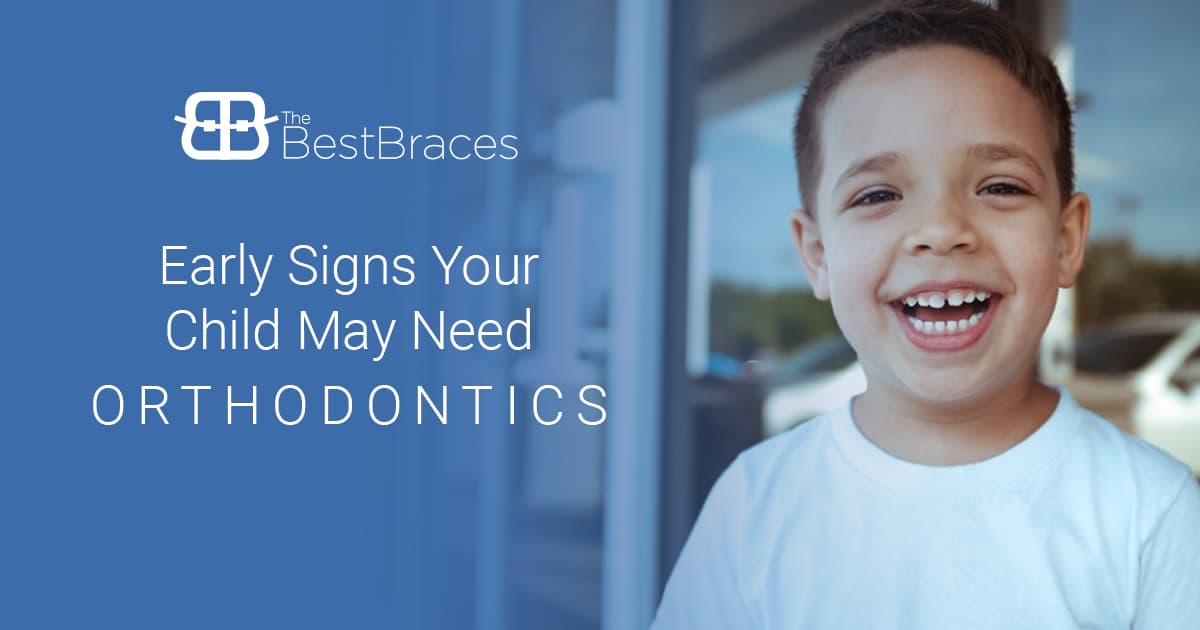
Early Signs Your Child May Need Orthodontics

Early Signs Your Child May Need Orthodontics

September 21, 2020 By The Best Braces

Early Signs Your Child May Need Orthodontics

Dental check ups in children should begin as soon as their teeth erupt, but they should begin consultations with an orthodontist no later than the age of 7 or 8. Orthodontic treatments usually begin between the ages of 9 and 14, when permanent teeth are still growing and developing and issues related to their growth can be fixed on time.

Most orthodontic problems may be inherited or develop over time due to the use of pacifiers, thumb or finger sucking, poor dental hygiene or nutrition, and other conditions. These changes in the jaw structure are known as malocclusion, and they’re the main reason why some kids as young as eight years old may need orthodontic treatments.

Early Signs Of Malocclusion

Malocclusion may be genetic, but it also can develop because of bad habits or conditions that are not treated in time, such as:

  • Irregular loss of baby teeth (too early or too late)
  • Abnormalities when chewing or biting
  • Mouth breathing
  • Thumb or finger sucking
  • Crowded, misplaced, or impacted teeth
  • Protruding or recessed jaw
  • Constantly biting the inner cheek
  • A cleft lip or palate
  • Prolonged use of a bottle during early childhood
  • Use of a pacifier past the age of three
  • Injuries that cause a misalignment of the jaw

Types of Malocclusions And Symptoms

  • Class 1: Involves just mild crowding or spacing of the teeth, but bite is mostly normal.
  • Class 2: Known as retrognathism, which consists of a severe and visible overbite, meaning the upper teeth and the jaw overlap the lower jaw and teeth.
  • Class 3: In this case, the lower jaw protrudes forward, causing the lower teeth to overlap the upper teeth and jaw. This is known as prognathism.

Keep an eye out for these signs and keep an open dialogue with your child’s pediatric dentist or orthodontist to give them the treatment they need as soon as possible and prevent complications. If you have questions or concerns about how your child’s teeth are developing, please call our Southfield office, and we will be happy to assist you. 
Recent articles

52065-Best Braces-BTS Ortho Promo-BLOG banner copy Back-to-School Smiles - A Great Time to Start Braces
The Best Braces Blog Image 2025 How Orthodontic Treatment Supports Jaw Health
The Best Braces Blog October 2025 Why Age 7 Is the Perfect Time for an Orthodontic Checkup

Book your appointment today.

18860 W 10 Mile Rd B, Southfield, MI 48075
Call our office at (248) 257-5170.
Book appointment
Best Braces Logo KO
  • Braces
  • Invisalign®
  • Orthodontic Services
  • Teeth Whitening
  • Zoom Teeth Whitening
  • Find a dentist near you
  • Privacy policy
  • Notice of Privacy Practices
  • Site map

© 2026 The Best Braces. All rights reserved. The above-listed practice complies with applicable Federal civil rights laws and does not discriminate on the basis of race, color, national origin, age, disability, or sex. Notice of non‑discrimination.

(248) 513-8287